
Expert Support for Dementia, Parkinson's, MND & MS
Compassionate, knowledgeable care across Canterbury and Dover for people living with dementia, Parkinson's disease, Motor Neurone Disease (MND), Multiple Sclerosis (MS), and other neurological conditions. Our specialist-trained carers understand complex neurological needs and provide person-centered support that enhances quality of life.
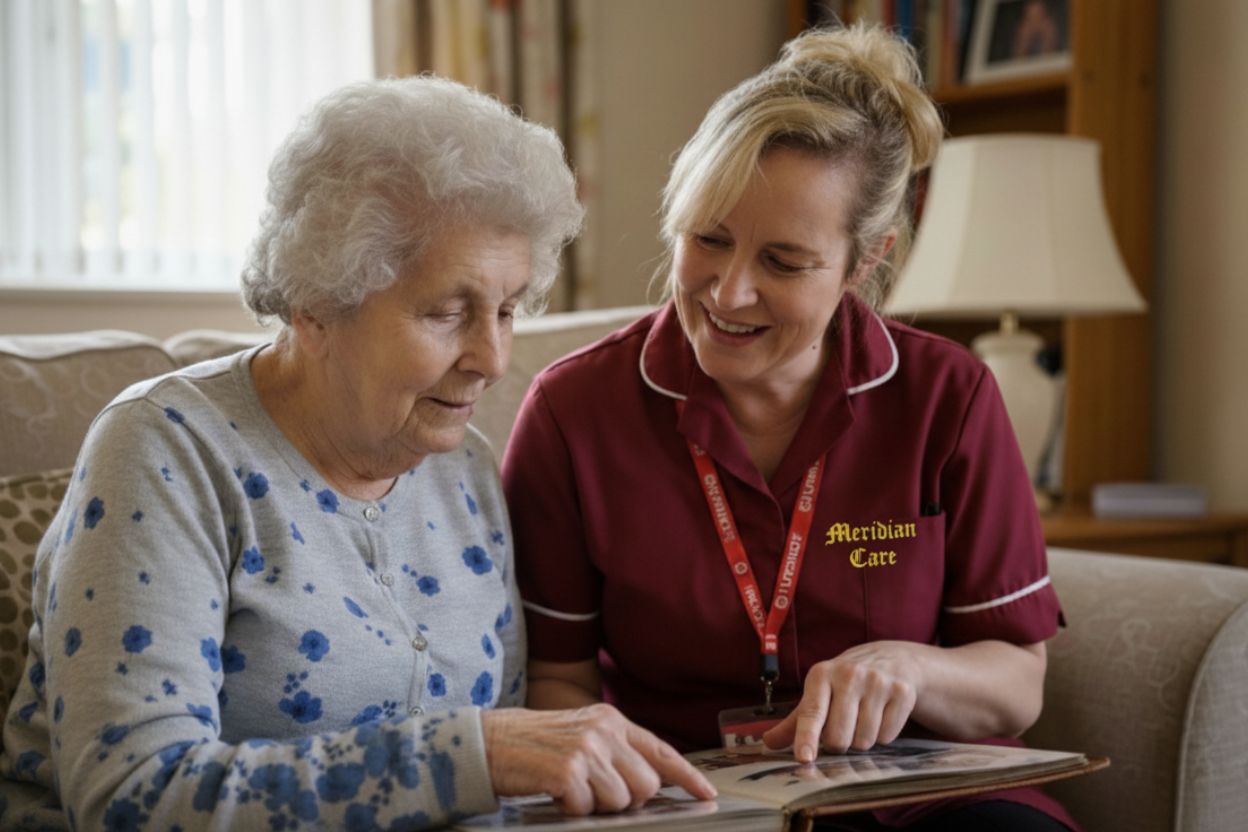
Living Well with Neurological Conditions - Specialist Care That Understands
Neurological conditions - diseases affecting the brain, spinal cord, and nervous system - bring profound, life-changing challenges. Dementia erodes memory and identity. Parkinson's disease causes tremor, rigidity, and movement difficulties. Motor Neurone Disease (MND) progressively paralyzes the body. Multiple Sclerosis (MS) brings unpredictable symptoms affecting movement, sensation, cognition, and fatigue.
These conditions don't just affect physical abilities - they impact communication, independence, relationships, mental health, and sense of self. They require specialist knowledge, adapted approaches, patience, creativity, and deep compassion from carers who truly understand the unique challenges of neurological disease.
At Meridian Care, we provide expert domiciliary care for people living with dementia, Parkinson's disease, Motor Neurone Disease, Multiple Sclerosis, and other neurological conditions across Canterbury, Dover, and East Kent. Our carers receive specialist training in neurological care, understanding not just the medical facts but the lived experience.
CQC Rated 'Good'
Regulated and quality-assured
Specialist Training
Neurological care expertise
Person-Centered Care
Adaptive, dignity-focused support
The Neurological Conditions We Support
We provide specialist care for a range of progressive neurological conditions, each presenting unique challenges requiring specific knowledge and approaches.
Dementia (All Types)
The Brain's Gradual Decline
Progressive brain conditions causing decline in memory, thinking, communication, behavior, and daily functioning.
Types:
- Alzheimer's Disease: 60-70% of cases - protein plaques damage brain
- Vascular Dementia: 20-30% - caused by reduced blood flow to brain
- Lewy Body Dementia: 10-15% - protein deposits, hallucinations common
- Frontotemporal Dementia: Younger-onset, personality changes prominent
- Mixed Dementia: Combination of types
Parkinson's Disease
Movement Disorder Affecting Body and Mind
Progressive condition caused by loss of dopamine-producing brain cells, primarily affecting movement but also causing non-motor symptoms.
- Tremor - shaking, usually starting in hands/fingers
- Rigidity - muscle stiffness and inflexibility
- Bradykinesia - slowness of movement
- Postural instability - balance problems and falls
- Cognitive changes and dementia
Motor Neurone Disease (MND/ALS)
Progressive Paralysis, Mind Intact
Devastating progressive disease where motor neurons die, causing gradual paralysis while the mind typically remains intact.
- Limb weakness and muscle wasting
- Speech difficulties (dysarthria)
- Swallowing problems (dysphagia)
- Breathing difficulties - eventual respiratory failure
- Communication loss - eventually unable to speak
Multiple Sclerosis (MS)
Unpredictable Neurological Disease
Autoimmune condition where immune system attacks myelin, disrupting nerve signals. Symptoms unpredictable and vary widely.
- Fatigue - overwhelming, most disabling symptom
- Walking and mobility problems
- Muscle weakness, spasms, spasticity
- Cognitive changes and 'brain fog'
- Pain, numbness, tingling
Our Specialist Neurological Care Services
Comprehensive support addressing the unique challenges of each neurological condition
Person-Centered Dementia Support
Seeing the person, not just the diagnosis. Understanding life story, maintaining personhood, validation approaches.
- Life story and identity recognition
- Adapted communication techniques
- Routine and familiarity maintenance
- Behavior as communication understanding
- Memory prompts and orientation support
Parkinson's Movement Support
Adapting to rigidity, tremor, slowness, and medication timing. Patient, unhurried care respecting Parkinson's pace.
- Understanding bradykinesia (everything takes longer)
- Strict medication timing - 'on' and 'off' management
- Freezing and fall management
- Supporting tremor and rigidity
- Speech and swallowing support
MND Communication & Total Care
Preserving voice and connection, supporting eating and breathing, providing dignified total physical care as paralysis progresses.
- Communication support (speech aids, eye-gaze)
- Dysphagia management and nutrition
- Respiratory support and breathing management
- Total physical care for complete paralysis
- End-of-life palliative care
MS Fatigue & Fluctuation Management
Understanding invisible MS fatigue, adapting to good days and bad days, supporting unpredictable symptoms.
- Respecting overwhelming MS fatigue
- Flexible care for fluctuating needs
- Mobility and balance support
- Cognitive and emotional support
- Bladder and bowel management
Why Specialist Training Makes a Difference
Neurological conditions require specialist knowledge, adapted approaches, and deep understanding
Condition-Specific Training
All carers trained in dementia, Parkinson's, MND, MS, and neurological conditions
Understanding Lived Experience
We know the frustration, fear, and daily challenges of neurological disease
Adapted Communication
Simplifying language for dementia, patience with Parkinson's speech, eye-gaze for MND
Symptom Recognition
Recognizing changes requiring medical attention - 'off' periods, relapses, behavior changes
Medication Knowledge
Understanding complex medication regimes, timing, side effects, interactions
Family Partnership
Supporting families caring for progressive conditions - respite, education, emotional support
What Families Say About Our Neurological Care
What Our Clients Say
Don't just take our word for it - hear from the families we've supported across Canterbury, Dover and surrounding areas.
Rated 'Excellent' on Homecare.co.uk based on verified client reviews
Request Your Specialist Neurological Care Assessment
Tell us about your needs and we'll arrange a comprehensive assessment
Frequently Asked Questions
Expert Care for Neurological Conditions
Specialist dementia, Parkinson's, MND, and MS care supporting you to live as well as possible